5 Scenarios that Help with Fears

Transform Fearful Kids and Adults to Fear Less

C’mon. How Does This Thing Work?!

I want you to know how the phearnik!® plush works to help with fears and transform fearful kids and adults to fear less.

I’ve told you about phearnik! — what it is and how it works. I’ve given you some proof of its effectiveness and how and why I created it in the first place. But I want to provide you with more examples of how phearnik!® can help with fears and transform fearful kids and adults to fear less.

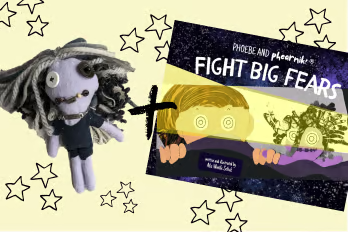
A picture of the phearnik! plush, a small rag doll with a lavender body, a navy blue jumpsuit and a wild head of yarn for hair. It has big black eyes and a squiggly mouth. Funny, cute and a little bit scary. The plush helps fearful kids and adults transform to fear less.

phearnik!® In Action

The following are “composite-style” scenarios, realistic situations drawn from known research on anxiety, mindfulness, exposure, and comfort objects. These scenarios show how people of all ages can put the cute and quirky little plush into action. This, then, helps to ease anxiety and build courage.

Support the phearnik!®  Campaign

After reviewing these scenarios, let me know if they have enhanced your understanding of how phearnik! works. If you see value in this product, consider supporting the phearnik!® Campaign. By doing so, you will be among the first to be notified when the plush becomes available. In addition, you will be contributing to help with fears and transform fearful children and adults to fear less.

phearnik! Scenarios

Building self-trust: “I did it — even though I was scared.”

A picture of a little girl holding her phearnik! The plush helps her transform her fears to fear less.

Dena, age 7, hated trying anything new. Even playdates at a different house made her stomach hurt. Her mom started reminding her to hold her phearnik!®, take slow breaths, and repeat “small fear keeps me safe, big fear makes me freeze.” Over a few months, Dena was able to join a new art class — still nervous, but she noticed, “I can be a little scared and do it anyway.” This is exactly how children build self-efficacy, a core idea from Bandura’s research: learning they can act despite fear.

Developing a calm inner voice: replacing harsh worry with soothing reminders

Liam, a college student, used to spiral with thoughts before presentations like “What if I mess up? What if everyone thinks I’m weird?” Keeping phearnik!® nearby gave him a tactile anchor (a proven grounding technique). Each time he thought of it and breathed out slowly, he practiced saying, “It’s okay to be nervous but I can still handle this.” Over time, that became his automatic self-talk — a shift well-documented in cognitive behavioral therapy studies.

Learning to separate feeling from fact: “Scared doesn’t mean stop.”

Faith, a middle school teacher, brought phearnik!® to her classroom for her students to use. But she ended up using it herself before presenting at meetings. She found it helped her notice: “My fear of presenting in front of my colleagues is uncomfortable, but it isn’t dangerous.” Having the plush around reminded her to pause, breathe, and choose action. This is tied to well-established mindfulness work (Kabat-Zinn) which shows mindfulness helps people observe emotions without over-identifying with them. More here.

A picture of a woman on stage presenting to a large seated audience. The woman presenting at a podium is looking back at the viewer of this picture with her hand on her phearnik! plush that helps her manage her fear of presenting in front of a large audience. The plush helps with fears and transforms the fearful adult to fear less. The plush reminds her to stay calm and keep her fear small and not freeze so she can do the presentation.

Becoming more willing to try new things: gentle exposure with a comfort cue.

Andrew, 4, wouldn’t go near the big slide at the park. His dad started bringing phearnik!® along, encouraging Andrew to pet its soft hair, take a deep breath, and look at the slide. Week by week, they got closer. Eventually, clutching the little plush tight, Andrew went down, loved it, and wanted to do it again. This follows a key principle of exposure therapy: small, supported steps with a comforting object reduces avoidance and builds courage.

Regulating the body faster after fear: soothing the nervous system

A black and white pen and ink drawing of a young girl looking fearful, nervous or scared. The picture is used to help illustrate how the phearnik! plush helps with fears and transforms fearful kids and adults to fear less.

In one study on transitional objects, children hugging a favorite toy had reduced cortisol spikes during stress (source: Passman, 1977). Similarly, Jamie, a teen, kept a phearnik!® in her backpack. During times of feeling anxious, she would reach in and stroke its soft body and hair while breathing slowly. This helped settle her racing heart, letting her return to class instead of going to the Nurse’s Office.

Building Courage Through Mindful Support

In moments of fear, doubt, or uncertainty, having tools like phearnik!® can make a world of difference. Whether it’s for children learning to trust themselves, students calming their inner critic, or adults navigating daily challenges, small visual and tactile prompts can empower us to act with courage. Building resilience doesn’t happen overnight, but with mindful practices and gentle supports, we learn to shrink big fears and expand possibilities — one brave step at a time.

This image represents "The phearnik! Campaign Roadmap." It shows what aws Studios plans to do over the course of the year to make the plush available for fearful kids and adults who want to build courage.

The phearnik! Campaign

So, what do you think? Did these stories help you better understand how the little plush works? If so, consider supporting the phearnik!® Campaign. Be among the first to know when the plush becomes available, all while supporting the phearnik!® movement — to help with fears and transform fearful kids and adults to fear less!

Thanks for reading!

This is a picture of Alis Wintle Sefick, the owner/operator of aws Studios and her signature.

Understand Your Teen

A Free Tool to Help you Understand Your Teen and

Strengthen Communication and Connection at Home

Raising a teenager today means navigating a whole mix of personalities, emotions, and communication styles. You may have noticed that what works for one of your kids—or one of their friends—completely backfires with another. That’s because teens, like adults, all have different social styles. You need help to understand your teen.

If you’ve ever wondered why your teen shuts down during serious talks, thrives on connection, or insists on structure and logic, this free resource can help.

An abstract graphic of a teenaged girl with red hair and earrings. She depicts a teenager who's parent would like information about raising adolescents like understanding the teen's social style.

Why Social Styles Matter for Parents

Understanding your teen’s social style can transform the way you connect with them. Whether you’re helping with homework, working through a disagreement, or just trying to talk about their day, getting help to understand your teen and knowing how they naturally communicate and process information can make a huge difference.

When you understand how your teen is wired socially and emotionally, you’re better able to:

  • Build stronger, more open relationships
  • Minimize arguments and misunderstandings
  • Support their growth in ways that feel authentic to them
  • Foster a calmer, more respectful home environment

Get the Free Social Styles List

This free Social Styles List gives you a simple breakdown of the four main social styles commonly seen in teens:

  • Drivers – Focused, direct, and independent. They like goals and clear expectations. Learn how to guide them without clashing.
  • Amiables – Loyal, friendly, and harmony-seeking. Discover how to support them with emotional safety and patience.
  • Expressives – Energetic, imaginative, and outgoing. Find ways to channel their enthusiasm and help them stay focused.
  • Analyticals – Detail-oriented, logical, and thoughtful. Learn how to communicate in ways that make sense to them and avoid unnecessary tension.

Each style comes with insight into how your teen might respond in different situations, and tips for supporting them based on their unique traits.

This Freebie Is a Sneak Peek Into a Bigger Picture

The Social Styles List is part of my Circle of Community program—a resource originally developed for educators that parents are now finding incredibly helpful, too. It offers simple strategies that promote empathy, reduce friction, and strengthen emotional connection.

Helping Teens Communicate in a Post-Pandemic World

Let’s face it—today’s teens are growing up in a time of intense social and emotional change. Many are still recovering from the isolation and disruption caused by the pandemic. They’re figuring out how to relate to others while navigating growing independence, academic pressure, and big feelings.

This free list helps you better understand how they interact, what motivates them, and how to encourage healthy communication—skills they’ll use for life.

Ready to understand your teen better?

Get the Social Styles List for free here and start building stronger connections at home, one conversation at a time.

Want even more tools like this? My Circle of Community resource offers deeper insights and simple activities to help you foster communication and emotional growth in your teen.

Help Teens Set Goals, Build Confidence

“I want to be a doctor… but I don’t think that will ever happen.”

That’s what I heard when I asked two teens what they dreamed of becoming. At first, they said “pediatricians!”—with excitement and a sense of purpose. But then came the doubt. “Kids like us don’t become doctors,” they shrugged. It was heartbreaking—but not unusual. We need to help teens set goals.

Why We Need to Help Teens Set Goals and See the Possibilities

Many teens have big dreams, but they don’t always have the tools or support to believe those dreams are possible. They may lack the guidance to break goals down into steps or simply haven’t had a chance to practice thinking about their future in a focused way. That’s where Master Your Mountain™ comes in.

An illustration of three children showing their dreams coming out of their heads. The picture represents how parents and teachers can help teens set goals and build confidence.

A Fun, Easy Goal-Setting Activity for Teens

A picture of the cover of the Master Your Mountain goal setting and planning resource at aws Studios.art TPT store. The resource helps parents and teachers help teens set goals and build confidence.

Master Your Mountain™ is a colorful, creative activity that helps middle and high schoolers identify their goals and begin making a realistic plan to reach them. Whether your teen or pre-teen wants to become a doctor, open a bakery, or just figure out their next steps after graduation, this activity makes the future feel doable—not daunting.

With just a few printable worksheets and a simple step-by-step process, your teen will:

  • Think about what they really want for their future
  • Identify what it will take to get there
  • Break that down into small, manageable steps

It’s like turning a foggy mountain into a clear hiking trail—one step at a time.

A Master Your Mountain™ Review

“My students loved using this resource. I used it as a class starter. My students had no trouble getting started with this assignment and were all very engaged. I was delighted with this resource and plan to reuse it.” Adrianne S. Used with 10th grade students. “Extremely satisfied.”      

Rating: 5 out of 5.

You Don’t Need to Be an Expert

Whether you’re homeschooling, parenting, or just want to support your teen in a meaningful way, Master Your Mountain™ is easy to use. It includes scripts to help guide conversations, and it can be completed in just a couple of sessions. Want to keep the momentum going? A monthly check-in or journaling session helps reinforce your teen’s progress and keeps them thinking about what’s next.

Help Your Teen Believe in What’s Possible

When teens begin to see that their goals are within reach, you’ll notice a shift—more confidence, more motivation, more engagement. It’s one of the most rewarding experiences as a parent.

Ready to help your teen start climbing?
Learn more and get your copy of Master Your Mountain™ [here].

This picture shows a teen rejoicing after climbing up a mountain. It is a metaphor for helping teens set goals and building confidence.

Ultimate Resource for Parenting Teens

A Handy, Research-Based Guide to Help You Connect with Your Teen

Raising a teenager isn’t easy. Between shifting moods, growing independence, and the rollercoaster of high school life, parenting during the teen years can feel overwhelming. Thankfully, there’s a straightforward, science-backed resource for parenting teens that can help: The Five Basics of Parenting Adolescents Pamphlet.

A picture of the cover of the aws Studios.art resource, The Five Basics of Parenting Adolescents Pamphlet

A Simple, Practical Resource for Parenting Teens

This two-sided, easy-to-read parenting teens guide is based on the respected research compilation, “Raising Teens: A Synthesis of Research and a Foundation for Action.” It breaks down the research into five clear, essential practices for building a strong, supportive relationship with your teen. Think of it as your parenting cheat sheet—one you can keep handy and revisit whenever things feel off-track.

Why This Matters

An abstract graphic of a teenaged girl with red hair and earrings. She depicts a teenager  who's parent would like a resource for parenting teens.

We all want to do right by our kids, but so much parenting advice is either too vague or buried in academic jargon. That’s what makes this pamphlet so helpful: it pulls the key takeaways from a large body of adolescent development research and puts them into a format you can actually use. You’ll find strategies that are simple to understand, easy to try, and powerful in practice.

Whether you’re dealing with daily homework battles, communication struggles, or just looking for ways to stay connected as your teen grows more independent, this guide can help.

How to Use This Easy Resource for Parenting Teens

  • Keep it visible. Put a copy on the fridge or in your planner so you can glance at it when you need a reminder.
  • Revisit it often. Parenting teens is not a “one and done” job. You may find new insights each time you read it.
  • Share it. Got a friend who’s also raising teens? Pass it along. Parenting is easier when we support each other.
  • Bring it to conversations. Whether you’re meeting with a teacher, counselor, or fellow parent, the pamphlet can be a great starting point for discussions about what teens need.

Get Your Ultimate Resource for Parenting Teens

Download the Five Basics of Parenting Adolescents Pamphlet for free here. It’s printable and made to fold up neatly—perfect for slipping into your bag or glove compartment.

Let’s be real: parenting teens can be tough. But with the right tools, it’s also incredibly rewarding. This resource for parenting teens makes it just a little easier.

A picture of the cover of the aws Studios.art resource, The Five Basics of Parenting Adolescents Pamphlet, the Ultimate Resource for Parenting Teens

Improving Access to Treatment with Skill Building

Mental Health Issues on the Rise

After 9/11, I remember hearing a news report that said over the following five years, the US would see a sharp rise in mental health issues and an increased need for access to treatment. During that time, the topic slowly crept into the news. Ten years later, the pandemic and athletes’ mental health advocacy created a new and bigger wave of reporting on the topic.

A picture of a little boy looking sad hugging his mother. An illustration of how mental health issues are on the rise and causing problems with access to treatment .

A Focus on Treatment

These media reports focused on the treatment of mental illness. In addition, because of the increased incidence of mental health issues, getting treatment has become both difficult and expensive.

A Critical Shortage of Available Treatment

An illustration of a therapist and a client. The picture underscores the increased need for access to treatment in a dearth of treatment options and a need for alternatives.

In an article on children’s mental health, best-selling  author Judith Warner calls the shortage of available treatment a “supply-chain [issue].” Importantly, even before the pandemic, says Warner, there was an “obscene shortage” of mental health practitioners. And, she adds, issues caused by the pandemic “multiplied the problem exponentially.”

Building Skills to Address the Treatment Shortage

Along with this extreme shortage of care, Warner found how, after frustration with the current access to treatment system, “[a] growing number of frustrated practitioners and researchers”… had begun to create “new approaches.”  These programs focused on prevention. States Warner,

“The common element, in all the new programs is a focus on skills — tools and techniques, validated by decades of science, which build resilience and enhance mental health. Skills that help kids be mindful of their feelings. Skills that enable them to calm themselves and pause to think before acting or speaking. Skills that empower them to act — in positive ways — when they’re feeling down, anxious, or angry, or overwhelmed. And skills that help them understand other people’s perspectives, and communicate their own needs, feelings and perceptions in ways that are both more thoughtful of others and more likely to be effective.”

Acquiring Skills is Not Always Easy

Skills help combat mental health issues. Moreover, they often go unpracticed.

This is due to a variety of reasons including the inability for people to see an immediate benefit, financial barriers, limited access to resources, a lack of support systems and a lack of the awareness of prevention services

Addressing Barriers to Skill Building

aws Studios.art seeks to address barriers to social and emotional learning. Building mental health with the Studios is not only easy but also affordable. And, in regard to addressing the lack of support systems, phearnik!® is, in essence, designed to be a personal safety net.

portable support system

A picture of the phearnik! plush, a small rag doll with a lavender body, a navy blue jumpsuit and a wild head of yarn for hair. It has big black eyes and a squiggly mouth. Funny, cute and a little bit scary. phearnik! is a cost effective support system and way to build mental health skills and an alternative to access to treatment.

Because it’s small and meant for travel, the plush acts as a portable support system. The idea is to have phearnik!® accessible whenever and wherever one might experience irrational fear and anxiety. Its presence reminds us to keep our fears small and not let them get big where they take control and make us freeze. See more about the phearnik!® support system here.

In Summary…

Because of increased incidences of mental health issues and a shortage of treatment, social emotional learning provides an effective alternative. With more prevention and skill building, the need for  treatment subsides.

But providing more skill building opportunities is not enough. There are barriers people experience to their social and emotional learning. These barriers include financial, access, and awareness limitations.

To address this issue

The aws Studios.art brand works  to break down some of the barriers to skill  building. Through the Studios, I provide resources that offer immediate benefit and are low cost and often free. And, if someone lacks a support system for practicing skills, phearnik! is just the thing. The plush acts as a portable personal guide and safety net.

A picture of the aws Studios.art Roles and Goals goal setting and planning resource available at their TPT store

What About You?

Have you experienced an inability to access mental health treatment? What do you think about skill building? Is this something that comes easy for you or is it difficult to practice? Do you have a support system in place to help with your social and emotional learning? What do you think of the phearnik!® plush as a support system? Let us know in the Comments.

If you are inclined, “Like” this post. Feel  free to “Share” it with others. And, as always, thanks for reading.

The aws Studios.art Brands

aws Studios.art + phearnik!® Mental Health Brands

I have two brands. My overall brand is aws Studios.art. It combines a mental health brand and art. I do this by sharing my social emotional learning skills building resources and my artwork. The mental health “arm” of the brand includes phearnik!®. It is a sub-brand of aws Studios.art.

A picture of the aws Studios.art logo, a mental health brand. The   tagline reads "boosting mental, emotional, and social health skill building."
A picture of a phearnik! logo, a sub-brand of the aws Studios.art mental  health brand with the name phearnik! in purple on a blue-green cloud

Is This You?

Showing all resources included in the classroom management bundle, a resource provided by the aws Studios.art mental health brand.
A bundle of classroom management resources

The audience for aws Studios.art and its related mental health brand phearnik! is broad. My mental health resources, designed for middle school and high school students, include teachers, counselors, therapists, and parents or caregivers of adolescents.

A picture of an aws Studios art collage part of the Studios mental health brand.

 Additionally, while the Studios art is for everyone, it especially speaks to art enthusiasts and buyers interested in fabric and paper collage  landscapes.

phearnik!® is for…

The phearnik!® plush helps fearful children overcome their fear and anxiety. Because of this, the phearnik!® audience includes the adults living with or working with these children especially parents, grandparents, and other relatives. This list also includes teachers, therapists, and counsellors, as well as medical professionals, clergy, and youth development workers.

A mental health brand Not Just for Kids

Not just for children, the phearnik!®  plush is for adults too. This audience of adults is comprised of adults dealing with irrational fears including writers who experience “writers’ block,” artists who have a “fear of the blank canvas,” and would-be entrepreneurs who struggle with taking the first steps in running a business. Read more about how the plush serves these adults here.

A picture of the phearnik! plush, a sub-brand of aws Studios.art mental health brand. It is a small rag doll with a lavender body, a navy blue jumpsuit and a wild head of yarn for hair. It has big black eyes and a squiggly mouth. Funny, cute and a little bit scary.
phearnik! has an accompanying picture book – “Phoebe and phearnik! Fight BIG Fears”

The Studios’ “Voice”

I strive to present my mental health brand with enthusiasm and respect. In doing this, it lands somewhere between “serious” and “fun.” Even though it is more “informal” than “formal,” I endeavor to provide evidence-based information while being caring, careful, and approachable.

The Studios’ Archetype

Of the four archetypes: Adventurer; Stability; Enlightenment; and Connection, the Studios’ archetype identifies as Adventurer. This includes being my “own hero, unafraid of adventures and boldly experiencing all life has to give.” The Studios could not identify as Adventurer if it wasn’t for phearnik!® The plush continues to remind me to keep my fears about running a business “small.” More about what this means here.

The Studios’ Doppelganger

I chose Simone Biles as my brand’s doppelganger or alter ego. Her strength, compassion, and energy are characteristics I try to convey with my brand. In addition, her brave leadership, role modelling, and mental health advocacy fit well with the Studios’ mission.

An illustration of Simone Biles the doppelganger or alter ego of the aws Studios.art mental health brand.
Simone Biles

Tailored for phearnik!®

The Simone doppelganger is also a good fit for the phearnik!® sub-brand. Simone’s qualities illustrate my vision for future owners of a phearnik!® It is my dream that, by using the fun and quirky little toy, fearful kids and adults everywhere overcome their non-life-threatening fears and anxiety. This, then, helps them build their strength, compassion, and energy.

In Conclusion…

This has been a “behind the scenes” peek into aws Studios.art. I hope it helps readers get to know me and my mental health brand better. Using brand voice, archetype and doppelganger provided me an enjoyable way to communicate to you what I do, how I do it, who I serve, and why.

 What do you Think?

How did I do? Do you better understand the aws Studios.art mental health brand and what I am trying to do? What do you think about my brand’s voice, archetype, and doppelganger? Do you think I missed anything? Do you know other brands that support mental health? Tell us about them in the Comments.

If you are inclined, “Like” this post. Feel  free to “Share” it with others. And, as always, thanks for reading.

The phearnik!® Crowdfunding  Campaign

The phearnik!® Campaign

A month ago, I announced my campaign to make phearnik!® available to every child who could use its subtle powers. These “powers” work to support children’s mental health. In particular, the quirky little plush helps kids be less scared of everything.

A Crowdfunding Project

To help me make the plush available in the marketplace, I plan to launch a fund-raising campaign later this year. The funds raised will help me with manufacturing costs. These include the manufacture of the phearnik!® plush and the printing of the accompanying Phoebe and phearnik!® Fight BIG Fears picture book.

A picture of a bookmark that says "Support Mental Health, Join the phearnik! Campaign" with a QR code to sign up.

Why Crowdfunding?

For my phearnik!® Campaign, I am using “crowdfunding.” Crowdfunding is a way to fund projects by raising money from a large number of people through the internet. Many artists and entrepreneurs have successfully raised funds and fostered awareness of their initiatives through crowdfunding.

Like these artists and entrepreneurs, I have invested my own funds into my project, along with the support of family and friends. To take my idea to the next step, I need more help. I want to branch out to include others who are also interested in supporting mental health.

An example of a “Reward”- a plush with a book
This Reward is the same with a T-shirt

Kickstarter Crowdfunding

For my crowdfunding campaign, I am using Kickstarter. Kickstarter is one of many online crowdfunding platforms. These platforms make it easy for creators to share their projects and receive funding. With Kickstarter, like similar platforms, investors or “backers” receive rewards for their investment.

I chose Kickstarter because I like the fact that, to receive funds from your backers, you must meet your funding goal. If you do not meet your goal, your project does not receive any funds. Plus, backers would not be expected to pay. Although challenging, this seems fairer for the investor.  A creator who reaches their goal is more likely to follow through with their initial intentions than those who do not.

Mental Health Issues on the Rise

Kids’ mental health issues are on the rise in the US and around the world. Many suffer anxiety and are hamstrung by their fears. These include irrational fears like being afraid of the water, going to a new school or getting a shot at the doctors. Furthermore, kids often lack the skills needed for their social and emotional learning. Parents of these children are frustrated and request more tools and strategies to help them help their kids.

Hear what Rebecca, a retired Pre-school Educator, had to say about phearnik!®:

“My now grown daughter could definitely have used a phearnik doll. She was very fearful of new things to the point that it affected her social connections with other kids her age. At the time there was no product like phearnik on the market. We relied on tiny “worry dolls“ to help her manage her fears. I definitely would have invested in phearnik had it been available at the time. I think it would’ve been a big help to her then.”

Support Children’s Mental Health

By supporting the phearnik!® Campaign, backers will be an essential link to bringing this mental health resource to fearful children and their parents. In addition, investors will be sponsoring the larger mission of “boosting” or supporting mental health. With the phearnik!® Campaign, this includes the message of reducing mental health issues with skill building aka social emotional learning (SEL).

What About You?

What have you used to help kids with their anxiety? In what other ways do you support mental health? Let us know in the Comments.

If you’re inclined, give this post a “Like!”  Support mental health, share this post with others.

Trix Are For Kids! But phearnik!® is Not (just for kids)

Adults and Irrational Fears

Previously, I wrote about phearnik!® and how to use it with kids. In addition, the little plush also helps adults overcome irrational fears and anxiety.

In the US, nearly 20% of adults deal with irrational fears and anxiety. Treatment often involves exposure therapy and cognitive behavioral therapy (CBT) which helps individuals gradually confront their fears and learn coping mechanisms. These include relaxation techniques, exercise, support from friends or professionals and practicing mindfulness. [Google AI]

The  phearnik!® plush provides a way to practice mindfulness. Also, I didn’t make it for kids. I made it for an adult…me!

Fear Of The Blank Canvas

A picture of a man with a fear of the blank canvas. He is sitting in front of a canvas on an easel scratching  his head like he doesn't know what he's going to paint. The picture resembles a Norman Rockwell painting of himself in front of his canvas scratching his head.
Collage illustration from the “Phoebe and phearnik! Fight BIG Fears” picture book

As an artist, I often dealt with a “fear of the blank canvas.” It’s like the “fear of the blank page” or “writers’ block” that some writers experience.

While it’s impossible to know the exact number of writers in the US who experience writer’s block or fear of the blank page, it’s a common experience, even for those considered successful. 

The same is true for artists. It’s impossible to put an exact number on how many artists in the US experience “blank canvas syndrome.” Still, it is recognized as a common experience among artists from newbies to seasoned professionals.

Overcoming Fear of the Blank Canvas

For years, I studied what I could do about my irrational fears and anxiety of the blank canvas. I read books like Art and Fear, Affirmations for Artists, and The Artist’s Way. But none of these helped me break through my debilitating fears until I read Elizabeth Gilbert’s “Big Magic: Creative living beyond fear.” 

Gilbert’s “… Road Trip”

In the book, Gilbert offers a new way for artists to confront their fears. Instead of trying to ignore it or get over it or get rid of it, she suggests we accept and acknowledge fear. In a vignette titled, “The Road Trip,” Gilbert uses the metaphor of taking a road trip as a lesson in acknowledging fear.

A picture of a man driving a car with a girl holding her doll in the backseat with a phearnik! strapped in beside her. The phearnik represents fear sitting in the back seat as explained in "The Road Trip" by Elizabeth Gilbert.

On the trip, you bring fear along, but it must sit in the backseat. And it doesn’t get to control anything. It doesn’t get to drive, and it definitely doesn’t get to control the radio.

This idea of acknowledging fear but not letting it take control was, for me, revolutionary. I immediately embraced this new way to deal with my irrational fears. I liked the idea of  embracing fear. It makes sense because it’s always there. But it needs restraint. It needs to be kept  in its place, restricted, tamped down.

The Birth of phearnik!® 

An illustration from the "Phoebe and phearnik!® Fight BIG Fears"children’s book that helps kids overcome their fears.

I wanted something to represent this fear in “the back seat,” an actual “thing.” This “thing” would remind me to practice the skill of keeping fear “small” or in its place. It is how and why I created phearnik!®  –  my “little fear.” And it works.

phearnik!®  Works

My phearnik!® helped me with, not only my fear of the blank canvas, but as a way to practice mindfulness to overcome fear in other areas of my life. It has helped me do what I have needed to do to bring this concept to others. I believe artists and others who struggle to overcome their irrational fears would benefit from a reminder to keep their fear under control. I believe this could help them live more fearlessly while experiencing new things and adventures.

How About You?

Are you an adult dealing with irrational fears? Have you struggled with letting your fears get the best of you? Maybe you’re artist or writer that has experienced fear of the blank canvas or page? Or are you someone who would like to make art but you are afraid of what people would say about it?

If this is you, do you think a phearnik!® could help you remember to keep your fear “small” and in its place? Do you think having the little plush around could help you fight your fears? Tell us what you think about it in the Comments.

Want To Know More?

If you would like to know more about phearnik, join the phearnik! Campaign.

Help bring the plush to all who could use its subtle power!

If you’re inclined, give this post a “Like!” 

Share this post. You may help someone overcome their fears.

* Sources: Blank Canvas and Writers’ Block

Parent Sharing, the Best Parenting Education

Parenting Struggles

When I parented my first-born, I didn’t know about the power of parent sharing. Instead, I often struggled on my own. This created a growing frustration with not always knowing what to do when, as a toddler, she misbehaved.

One time, I asked my mother for help. Her reply, “Oh, I never had that problem. You were so good.” Obviously, my mother didn’t remember her “yardstick” parenting strategy. As a tiny tot when I disobeyed, she came after me – stick in hand. Though, more often than not, she used it to threaten me, not hit me. Even so, this was not a strategy I wanted to use with my children. Poor memory or not, my mother was no help.

A humorous illustration of the "old woman and the shoe" depicting parenting a lot of children.

Parenting Classes

One day, I mentioned my frustration to my health care provider. She suggested I enroll in a parenting class provided by our health maintenance/insurance organization. 

Who me?! A parenting class?!

With an air of superiority, I thought, “Who me? A parenting class? Weren’t they for parents involved with child protective services? Weren’t they for parents who abused their kids and had them taken away?” That wasn’t me! Plus, I was a college graduate! I had a degree! I shouldn’t need parenting education! But, actually, I did.

Too good for class. From Phoebe and phearnik! Fight BIG Fear picture book

So, begrudgingly, I attended the classes.

Yes, a Parenting Class

Taught by a nurse and a nurse practitioner from the HMO, the class introduced 15 parent participants (of which only one was a social service mandate) to the “Systematic Training for Effective Parenting (STEP)” program. The course consisted of strategies found to be effective in raising socially and emotionally healthy children. 

Parent Sharing, the Best Parenting Education

What I particularly liked in the classes was “parent sharing.” This happened when one parent asked about how to deal with an issue, and another would say something like, “Oh, that? I don’t have an issue with that because this is what I have done when that happens….”  I learned some of the best  parenting “strategies” from parent sharing. 

Over time, I came to embrace the class – strategies, parent sharing, and all. The program provided me with information to direct my child’s behavior with less stress and more consistent love and understanding. I prospered. And, excited about the things I learned, I wanted to spread the word. I set out to share them with others. This ignited my journey as a mental health and parenting educator.

Other Parenting Programs

Conflict Resolution

Soon after I completed the STEP program, a course on conflict resolution came to town. Conflict resolution  or conflict management interested me. Even though I had been having a challenging time with my toddler, my husband and I had some communication challenges too. Again, the classes delivered. They  provided me with an arsenal of additional skills and strategies to implement whenever I needed them.

EPIC

Then, after this, I became a trainer of the EPIC parenting education program.  EPIC stands for “Every Person Influences Children” developed by Bob Wilson from Buffalo, NY. Frustrated by the high rate of local unintended teen pregnancies, a  concerned parent in our town wanted to do something about the problem. Her pregnancy prevention strategy included providing parents of teens in the community with a parenting program. Along with some other moms, I traveled to Buffalo and received the EPIC training. We then came back home and started facilitating parent groups. 

A Combination of Courses

After training the EPIC program for a while, I thought parents could benefit from combining it with both the STEP and conflict resolution classes. Taking  a little bit from EPIC and STEP and most of the information from the conflict management course, I developed a new parenting education program. 

I then taught the course at the NY State Education Dept. Board of Cooperative Education Services (BOCES) Adult Education Program in Syracuse, NY. I enjoyed teaching the new curriculum. But, again, more importantly, what was best was the parent sharing.

Parent-to-Parent – Head of the Class

As a facilitator of the classes, I both supported and reveled in the participants’ sharing of their parenting ideas, tips, and strategies. A parent may have had an issue in one area but in others they provided well tested ideas or techniques for someone else. This became a constant and welcome cycle within our learning community.

Through my years as an educator, my colleagues and I always agreed that one of the most important teaching strategies is facilitating the sharing of ideas from one student or participant to another. This is particularly true when parents share parenting strategies with each other.

What about you? 

Have you particpated in parenting education? If you did, was it in-person or virtual?   Did you like it?  Why or why not?  Do you have a child rearing tip or strategy that works/worked well for you that you’d like to share?Tell us about it in the Comments.

Looking for resources?

Check out the National Parenting Education Network (NPEN), a national organization that promotes the field of parenting education and encourages information sharing, professional development and networking opportunities for individuals who educate and support parents.

The Best Way to Introduce phearnik!® to Kids

Helping Kids Overcome Anxiety

If you’ve been following the phearnik!® Campaign, you know it’s about helping fearful children overcome their fears. You’re intrigued by the little plush. You’ve seen the “How To” steps and know how it works. You’d like to introduce phearnik!® to your child. But you’d like to have some help. You want something like a book that helps kids with anxiety.

A picture of the phearnik! plush, a small rag doll with a lavender body, a navy blue jumpsuit and a wild head of yarn for hair. It has big black eyes and a squiggly mouth. Funny, cute and a little bit ugly. The toy helps reduce child anxiety.

A Picture Book to Help Kids Overcome Fears

Phoebe and phearnik!® Fight BIG Fears is just the thing! It’s a children’s book that helps kids with anxiety. In it, a little girl, Phoebe, experiences a lot of irrational fears. In particular, she’s afraid of the dark and going in the water as well as other similar kid fears. These fears keep her from doing things she really wants to do like playing with other kids and having fun.

In the book, Phoebe’s mom tells her,

“It’s okay to have a little fear. It helps you pay attention and keeps you safe. But your fear is too big. It keeps you from doing what you want to do. You need to make your fear small.”

A Toy that Helps with Anxiety

After this, Phoebe takes the reader on an amusing journey. Trying to “make her big fears small,” she finds nothing works. That is until she creates a “phearnik!®,” her “Little Fear.”  The toy helps Phoebe reduce her anxiety. She takes  phearnik!® with her everywhere to remind her to keep her fears small. In this way, Phoebe shows fearful kids it’s okay to have a little fear. Like her mother says, it helps her to pay attention to being safe. And, when you don’t let it get big, you have more fun playing with others.

A picture of a little girl holding her phearnik!

An Easy Way to Help Kids with Anxiety

A picture of an adult most likely a parent reading reading a book to a child. The picture helps illustrate how the "Phoebe and phearnik!® Fight BIG Fears" children’s book provides parents, teachers and counselors with an easy way to help a kid with their fear.

The Phoebe and phearnik!® Fight BIG Fears children’s book provides parents, teachers and counselors with an easy way to help a kid with fear and anxiety. The colorful paper collage illustrations readily engage both boys and girls in Phoebe’s story.  Additionally, the even reading pace clearly tells the story of how a kid solves the problem of making their “big” irrational fears small.

An illustration from the The "Phoebe and phearnik!® Fight BIG Fears"children’s book that helps kids overcome their fears.
Illustrations from “Phoebe and phearnik!® Fight BIG Fears.” See a trailer of the book here.
An illustration from the "Phoebe and phearnik!® Fight BIG Fears"children’s book that helps kids overcome their fears.
A picture of a collage from the aws Studios.art picture book when Phoebe gives a phearnik! to her dad.

A Children’s Book About Mental Health

At the end of Phoebe and phearnik!® Fight BIG Fears, there’s a letter for adult readers. The letter explains  how Phoebe teaches herself a mental health skill. It explains the type of skill Phoebe learns and how it works to reduce a child’s anxiety. Furthermore, the letter says, even though Phoebe’s too young to understand the brain science, she’s learned a way to calm her fear or “keep it small.” This helps her do the things she really wants to do.

A picture showing the letter to readers at the end of Phoebe and phearnik!® Fight BIG Fears providing adults with more information about how the book helps children with anxiety.

One Of The Best Anxiety Books For Kids

Here’s what people are saying about phearnik!® and the book:

Alis Wintle Sefick has freshly written and illustrated a lovely children’s storybook which highlights strategies to combat anxiety in children. This interesting story, told from the voice of a school-age child, offers a tool to address current emotional stresses, which are affecting kids, in higher numbers these days.  I highly recommend this gem of a book. Laura Dolan Jacobsen FNP-BC, Child Development

My now grown daughter could definitely have used a phearnik doll. She was very fearful of new things to the point that it affected her social connections with other kids her age. At the time there was no product like phearnik on  the market. We relied on tiny “worry dolls“ to help her manage her fears. I definitely would have invested in phearnik had  it been available at the time. I think it would’ve been a big help to her then. Rebecca Passanante, Retired Pre-school Educator

How to Get the Book

The Phoebe and phearnik!® Fight BIG Fears picture book will be available through the phearnik!® Campaign. Sign up and be the first to know when you can get the book!

What about you? What books have you used with kids to help them with their anxiety? Let us know in the Comments.

Give this post a “Like” if you’re inclined. Share this post with others. You never know when you could be helping a parent with a child in need.