Meet phearnik!® the Courage Buddy™

A Plush Toy for Managing Fear

Discover how a plush toy for managing fear can be an ideal solution, offering comfort and support to help both children and adults take control of their anxieties.

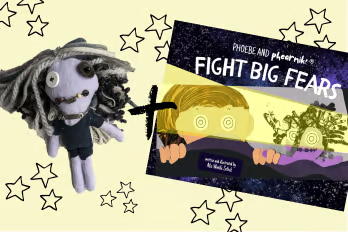
A picture of the phearnik! the Courage Buddy plush, a small rag doll with a lavender body, a navy blue jumpsuit and a wild head of yarn for hair. It has big black eyes and a squiggly mouth. Funny, cute and a little bit scary.

Mental Health Issues on the Rise

Picture of a small, sad boy hugging their mom.

Importantly, many children struggle to manage fear and anxiety, such as being afraid of the dark, while adults can also face irrational fears that disrupt daily life. With mental health concerns continuing to rise, frustrated parents searching for solutions for their anxious kids—and adults grappling with non-life-threatening fears—are looking for effective tools and strategies.

Why Managing Fear and Anxiety Need Tools, Not Just Talk

Unquestionably, mental health issues for both kids and adults are on the rise. Many suffer anxiety and are hamstrung by their fears. For kids, it can be things like being afraid of the water, going to a new school or getting a shot at the doctors. For adults, this includes socializing at cocktail parties, public speaking, writers’ block, an artist’s fear of the blank canvas, or an entrepreneur’s fear of the first step to creating a business.

Tangible, safe tools can help bridge the gap between paralyzing fear and managing it.

A Safe Tool – A Plush Prompt

phearnik!® means “Little Fear.” Above all, it is both a tactile and visual prompt. It reminds fearful kids and adults to keep fear “small.” Indeed, having a “little fear” when faced with non-life-threatening anxieties provides enough safety to try new experiences by helping us pay attention. But too much fear or letting it get “big” stops us from doing what we want or need to do.

The small phearnik!® or “Little Fear” prompts  its owner to remember to keep fear small. This is done by, first, calming or taking a breath and letting it out. In addition, the mind and body are ready to take the first small “step” of giving a new experience a try. For kids, it’s like putting a toe into the “scary” water or stepping just inside the doorway of the dark bedroom, holding their stuffie. For adults, it’s like putting words to a page or paint on a canvas.

The Courage Buddy™ provides physical comfort with its soft design. Its reminder to keep fear small serves as an emotional cue. Furthermore, this visual and tactile item may contribute to stress reduction during difficult periods through touch and familiarity, while also assisting in reframing fearful experiences.

A picture of the phearnik! the Courage Buddy plush, a small rag doll with a lavender body, a navy blue jumpsuit and a wild head of yarn for hair. It has big black eyes and a squiggly mouth. Funny, cute and a little bit scary.

Beyond Comfort: Building Courage Skills

Clearly, many individuals do not encounter intense fear when facing situations that are not life-threatening. This can be attributed to the skill of redirecting these thoughts.

Fear originates in the limbic system of the brain and is inherently primal. This often causes various experiences to seem intimidating. It is essential to move irrational fear-based thoughts to the prefrontal cortex. Here reasoning and practical decision-making take place. This process involves recognizing that the perceived threat is not actually a matter of survival. It enables individuals to respond more rationally and approach new challenges confidently.

phearnik!® prompts the practice of switching fearful thoughts from its initial primal reaction to modern and logical calm responses. This skill strengthens mental health. It is an intrapersonal communication skill, a type of mindfulness. More here.

How to Use the phearnik!® Prompt

The phearnik!® prompt is easy to use. Click to download the “5 Steps to Help Anxious Kids Build Courage.” The steps show how to put the little toy plush into action to help manage fear.

A picture of the 5 Steps to Help Kids Manage Fear using phearnik! the Courage Buddy.

Why This Plush is Different

The phearnik!® novelty toy plush for managing fear is designed with strategies to reduce fear.

Many plush toys currently available address sensory sensitivity and provide comfort. In contrast, there are fewer products specifically aimed at supporting children in developing mental health skills. phearnik!® the Courage Buddy™ focuses on mindfulness. This is a technique that helps children shift instinctive fear responses toward more cognitive approaches.

Also, unlike other comfort plushies,  the phearnik!® novelty toy supports various social and emotional skill building. In addition, this includes problem solving, perseverance, storytelling, and adapting to increasing challenges during play. Moreover, its design encourages interaction and shared play between children and adults.

The phearnik!® novelty toy plush for managing fear is also paired with a picture book. The book, Phoebe and phearnik!® Fight BIG Fears, aims to both educate and reinforce skills for managing fear. With the book and the plush together, play is combined along with reading activities.

Overall, the phearnik!® novelty toy plush is presented as more than just a novelty or toy for many different audiences. It is positioned as a resource, companion, and support for building confidence and courage.

Benefits for Different Audiences

phearnik!® the Courage Buddy™ provides uses for different audiences including kids, parents, teachers, therapists and counselors, and adults dealing with irrational fears.

For Kids
A picture of a little girl holding her phearnik! Courage Buddy. The plush helps her overcome her fears so she can join in and have fun.
  • As a child’s “little fear,” the plush helps children externalize fear such as, “phearnik!® helps me keep my fear small.”
  • The small, soft toy encourages self-soothing including slow breathing, cuddling, and storytelling.
  • The Courage Buddy™ is all about creating safe opportunities to practice courage in small steps.
Parents
  • The plush and its accompanying picture book offers parents a gentle, non-confrontational way to talk about fear with their children.
  • Both the book and the doll support bedtime routines, transitions, and encouragement during moments of anxiety such as a doctor’s visit or the first day of school.
  • phearnik!® the Courage Buddy™ acts as a shared language between parent and child for managing fears.
A picture of a parent talking on the phone holding an infant with a younger child holding on trying to get the parent's attention.
Teachers & Counselors
  • The book and plush combo provide a classroom or counseling office with tools for helping fearful students regulate emotions.
  • Both can be used in social-emotional learning (SEL) lessons or therapy sessions.
  • The novelty toy encourages group conversations about courage, resilience, and self-management.
And Adults with Irrational Fears
  • Similar to stress balls or weighted blankets, but more personal, the little Courage Buddy™ provides grounding during moments of panic or anxiety.
  • The quirky plush serves as a fun and discreet comforting reminder to slow down, breathe, and keep fears small.
  • The novelty plush reframes “childish comfort” as a valid wellness strategy for grown-ups.
A picture of a woman on stage presenting to a large seated audience. The woman presenting at a podium is looking back at the viewer of this picture with her hand on her phearnik! plush that helps her manage her fear of presenting in front of a large audience. The plush reminds her to stay calm and keep her fear small and not freeze so she can do the presentation.
Phoebe’s mom with her Courage Buddy from “Phoebe and phearnik! Fight BIG Fears” picture book coming soon. See a trailer of the book.

The Courage Buddy: a fun way to manage fear

Incorporating a novelty plush toy for managing fears like phearnik!® as a supportive tool can make a meaningful difference in navigating everyday anxieties. By providing a comforting, tangible reminder to keep anxieties “small,” this plush toy helps foster resilience. In addition, it encourages positive behavioral change. With rising mental health challenges, accessible tools like these empower individuals. This is done by helping them face their fears, one small step at a time. Ultimately, having a small companion to take anywhere can transform overwhelming moments into opportunities for growth and courage.

What ABout You?

 “Is there anyoue in your life who could use a courage-boosting plush?” Tell us in the Comments section.

The 4 Phases of phearnik!®- The Fear Less Plush

Why phearnik!®- the Fear Less Courage Buddy

I created the phearnik!® (pronounced “fear nick,” meaning “Little Fear”) Courage Buddy plush to help me fear less and manage my anxiety. The character started out with a face of buttons and beads. Over the past four years, it has gone through four transformations—each one showing a new stage in its development. Now, it’s changing once again.

The 4 Phases of phearnik!®, the Courage Buddy Plush

Phase 1 of the Fear Less Plush

Here’s how the very first ” fear less” Courage Buddy plush came to life: I drew a pattern for its head, body, and long, skinny arms and legs. Using some beige cotton fabric I had on hand, I cut out the pieces and sewed them together. For its signature wild hair, I used yarn, and I added button eyes and a beaded mouth to give it a look I imagined as “funny ugly” or “scary cute.” I believe I captured that playful spirit.

This is a picture of the original phearnik! Courage Buddy plush that helps fearful kids and adults fear less. It is 6
The original phearnik! Courage Buddy plush

Courage Buddy Phase 2

A picture of a little girl holding her phearnik! Courage Buddy. The plush helps her overcome her fears so she can join in and have fun.
Phase 2 lavender phearnik!

Subsequently, I wanted phearnik!® to feel even more inclusive, so I made it more gender and race neutral in the next phase. The body changed from beige to a soft, flannel-like lavender, and the dress swapped for a navy jumpsuit. To add a bit of flair, I gave the “fear less” phearnik!® an necklace made from a baby’s ID bracelet, proudly showing its name.

Phase 3 of the Courage Buddy

Along with growing interest in the “fear less” Courage Buddy, I made three copies for close friends and family. In addition, I realized that my sewing each plush was not sustainable. To make it more accessible and affordable, phearnik!® became smaller, and the detailed button-and-bead face swapped for a painted version.

The body fabric switched to felt, and the eyes and mouth painted with acrylics. Clearly, feedback from toy industry professionals highlighted concerns that this version appeared too scary for young children. Furthermore, this prompted further revisions for the next phase.

A picture of Phase 3 of the phearnik! Courage Buddy plush.
Phase 3 phearnik! – Indeed too scary but still has an ID necklace

Phase 4

For Phase 4, I revisited the Phase 2 version of phearnik!® but made strategic adjustments to prepare for manufacturing. The plush’s necklace became too expensive to produce at scale. I replaced it with the phearnik!® logo displayed directly on its jumpsuit. The doll’s facial features also shifted from painted details to embroidered ones, enhancing both durability and consistency for mass production.

A picture of the phearnik! Courage Buddy plush prior to getting turning lavender.
Original phearnik! preparing for transformation
Ready for its dye bath
A picture of the Phase 4 phearnik! Courage Buddy.
phearnik! transformed once again

To streamline the prototyping process, I opted to modify the original plush rather than sew a brand-new one. I dyed the original off-white body to lavender and dressed it in the navy jumpsuit. Then I added the logo using iron-on transfer paper. I sent the manufacturer a photo illustration of the new embroidered face design. But I’m keeping the classic button-and-bead face for my personal collection,

Multiple Phases — A Common Practice

It’s common for inventions to evolve through several phases and prototype iterations. Reflecting on the journey, each stage of the “fear less” plush brought meaningful improvements. Although I enjoyed refining each version, the prospect of producing multiples by myself was daunting. This drove my push toward a manufacturable design.

Another Phase for phearnik!®- the Courage Buddy

Last year, I began researching the requirements for large-scale plush manufacturing—a story for another time. Meanwhile, phearnik!® continues to evolve. I’ve sent detailed specifications to an overseas toy manufacturer and am currently awaiting a sample plush based on those instructions. This sample will reveal how the final manufactured version of phearnik!® will look.

Once I receive the finished sample, I’ll share the results and updates on the “fear less” Courage Buddy’s ongoing transformation right here.

A picture of the phearnik! plush, a small rag doll with a lavender body, a navy blue jumpsuit and a wild head of yarn for hair. It has big black eyes and a squiggly mouth. Funny, cute and a little bit scary.
Phase 5 phearnik! for manufacturing

5 Scenarios that Help with Fears

Transform Fearful Kids and Adults to Fear Less

C’mon. How Does This Thing Work?!

I want you to know how the phearnik!® plush works to help with fears and transform fearful kids and adults to fear less.

I’ve told you about phearnik! — what it is and how it works. I’ve given you some proof of its effectiveness and how and why I created it in the first place. But I want to provide you with more examples of how phearnik!® can help with fears and transform fearful kids and adults to fear less.

A picture of the phearnik! plush, a small rag doll with a lavender body, a navy blue jumpsuit and a wild head of yarn for hair. It has big black eyes and a squiggly mouth. Funny, cute and a little bit scary. The plush helps fearful kids and adults transform to fear less.

phearnik!® In Action

The following are “composite-style” scenarios, realistic situations drawn from known research on anxiety, mindfulness, exposure, and comfort objects. These scenarios show how people of all ages can put the cute and quirky little plush into action. This, then, helps to ease anxiety and build courage.

Support the phearnik!®  Campaign

After reviewing these scenarios, let me know if they have enhanced your understanding of how phearnik! works. If you see value in this product, consider supporting the phearnik!® Campaign. By doing so, you will be among the first to be notified when the plush becomes available. In addition, you will be contributing to help with fears and transform fearful children and adults to fear less.

phearnik! Scenarios

Building self-trust: “I did it — even though I was scared.”

A picture of a little girl holding her phearnik! The plush helps her transform her fears to fear less.

Dena, age 7, hated trying anything new. Even playdates at a different house made her stomach hurt. Her mom started reminding her to hold her phearnik!®, take slow breaths, and repeat “small fear keeps me safe, big fear makes me freeze.” Over a few months, Dena was able to join a new art class — still nervous, but she noticed, “I can be a little scared and do it anyway.” This is exactly how children build self-efficacy, a core idea from Bandura’s research: learning they can act despite fear.

Developing a calm inner voice: replacing harsh worry with soothing reminders

Liam, a college student, used to spiral with thoughts before presentations like “What if I mess up? What if everyone thinks I’m weird?” Keeping phearnik!® nearby gave him a tactile anchor (a proven grounding technique). Each time he thought of it and breathed out slowly, he practiced saying, “It’s okay to be nervous but I can still handle this.” Over time, that became his automatic self-talk — a shift well-documented in cognitive behavioral therapy studies.

Learning to separate feeling from fact: “Scared doesn’t mean stop.”

Faith, a middle school teacher, brought phearnik!® to her classroom for her students to use. But she ended up using it herself before presenting at meetings. She found it helped her notice: “My fear of presenting in front of my colleagues is uncomfortable, but it isn’t dangerous.” Having the plush around reminded her to pause, breathe, and choose action. This is tied to well-established mindfulness work (Kabat-Zinn) which shows mindfulness helps people observe emotions without over-identifying with them. More here.

A picture of a woman on stage presenting to a large seated audience. The woman presenting at a podium is looking back at the viewer of this picture with her hand on her phearnik! plush that helps her manage her fear of presenting in front of a large audience. The plush helps with fears and transforms the fearful adult to fear less. The plush reminds her to stay calm and keep her fear small and not freeze so she can do the presentation.

Becoming more willing to try new things: gentle exposure with a comfort cue.

Andrew, 4, wouldn’t go near the big slide at the park. His dad started bringing phearnik!® along, encouraging Andrew to pet its soft hair, take a deep breath, and look at the slide. Week by week, they got closer. Eventually, clutching the little plush tight, Andrew went down, loved it, and wanted to do it again. This follows a key principle of exposure therapy: small, supported steps with a comforting object reduces avoidance and builds courage.

Regulating the body faster after fear: soothing the nervous system

A black and white pen and ink drawing of a young girl looking fearful, nervous or scared. The picture is used to help illustrate how the phearnik! plush helps with fears and transforms fearful kids and adults to fear less.

In one study on transitional objects, children hugging a favorite toy had reduced cortisol spikes during stress (source: Passman, 1977). Similarly, Jamie, a teen, kept a phearnik!® in her backpack. During times of feeling anxious, she would reach in and stroke its soft body and hair while breathing slowly. This helped settle her racing heart, letting her return to class instead of going to the Nurse’s Office.

Building Courage Through Mindful Support

In moments of fear, doubt, or uncertainty, having tools like phearnik!® can make a world of difference. Whether it’s for children learning to trust themselves, students calming their inner critic, or adults navigating daily challenges, small visual and tactile prompts can empower us to act with courage. Building resilience doesn’t happen overnight, but with mindful practices and gentle supports, we learn to shrink big fears and expand possibilities — one brave step at a time.

This image represents "The phearnik! Campaign Roadmap." It shows what aws Studios plans to do over the course of the year to make the plush available for fearful kids and adults who want to build courage.

The phearnik! Campaign

So, what do you think? Did these stories help you better understand how the little plush works? If so, consider supporting the phearnik!® Campaign. Be among the first to know when the plush becomes available, all while supporting the phearnik!® movement — to help with fears and transform fearful kids and adults to fear less!

Thanks for reading!

This is a picture of Alis Wintle Sefick, the owner/operator of aws Studios and her signature.

The aws Studios.art Brands

aws Studios.art + phearnik!® Mental Health Brands

I have two brands. My overall brand is aws Studios.art. It combines a mental health brand and art. I do this by sharing my social emotional learning skills building resources and my artwork. The mental health “arm” of the brand includes phearnik!®. It is a sub-brand of aws Studios.art.

A picture of the aws Studios.art logo, a mental health brand. The   tagline reads "boosting mental, emotional, and social health skill building."
A picture of a phearnik! logo, a sub-brand of the aws Studios.art mental  health brand with the name phearnik! in purple on a blue-green cloud

Is This You?

Showing all resources included in the classroom management bundle, a resource provided by the aws Studios.art mental health brand.
A bundle of classroom management resources

The audience for aws Studios.art and its related mental health brand phearnik! is broad. My mental health resources, designed for middle school and high school students, include teachers, counselors, therapists, and parents or caregivers of adolescents.

A picture of an aws Studios art collage part of the Studios mental health brand.

 Additionally, while the Studios art is for everyone, it especially speaks to art enthusiasts and buyers interested in fabric and paper collage  landscapes.

phearnik!® is for…

The phearnik!® plush helps fearful children overcome their fear and anxiety. Because of this, the phearnik!® audience includes the adults living with or working with these children especially parents, grandparents, and other relatives. This list also includes teachers, therapists, and counsellors, as well as medical professionals, clergy, and youth development workers.

A mental health brand Not Just for Kids

Not just for children, the phearnik!®  plush is for adults too. This audience of adults is comprised of adults dealing with irrational fears including writers who experience “writers’ block,” artists who have a “fear of the blank canvas,” and would-be entrepreneurs who struggle with taking the first steps in running a business. Read more about how the plush serves these adults here.

A picture of the phearnik! plush, a sub-brand of aws Studios.art mental health brand. It is a small rag doll with a lavender body, a navy blue jumpsuit and a wild head of yarn for hair. It has big black eyes and a squiggly mouth. Funny, cute and a little bit scary.
phearnik! has an accompanying picture book – “Phoebe and phearnik! Fight BIG Fears”

The Studios’ “Voice”

I strive to present my mental health brand with enthusiasm and respect. In doing this, it lands somewhere between “serious” and “fun.” Even though it is more “informal” than “formal,” I endeavor to provide evidence-based information while being caring, careful, and approachable.

The Studios’ Archetype

Of the four archetypes: Adventurer; Stability; Enlightenment; and Connection, the Studios’ archetype identifies as Adventurer. This includes being my “own hero, unafraid of adventures and boldly experiencing all life has to give.” The Studios could not identify as Adventurer if it wasn’t for phearnik!® The plush continues to remind me to keep my fears about running a business “small.” More about what this means here.

The Studios’ Doppelganger

I chose Simone Biles as my brand’s doppelganger or alter ego. Her strength, compassion, and energy are characteristics I try to convey with my brand. In addition, her brave leadership, role modelling, and mental health advocacy fit well with the Studios’ mission.

An illustration of Simone Biles the doppelganger or alter ego of the aws Studios.art mental health brand.
Simone Biles

Tailored for phearnik!®

The Simone doppelganger is also a good fit for the phearnik!® sub-brand. Simone’s qualities illustrate my vision for future owners of a phearnik!® It is my dream that, by using the fun and quirky little toy, fearful kids and adults everywhere overcome their non-life-threatening fears and anxiety. This, then, helps them build their strength, compassion, and energy.

In Conclusion…

This has been a “behind the scenes” peek into aws Studios.art. I hope it helps readers get to know me and my mental health brand better. Using brand voice, archetype and doppelganger provided me an enjoyable way to communicate to you what I do, how I do it, who I serve, and why.

 What do you Think?

How did I do? Do you better understand the aws Studios.art mental health brand and what I am trying to do? What do you think about my brand’s voice, archetype, and doppelganger? Do you think I missed anything? Do you know other brands that support mental health? Tell us about them in the Comments.

If you are inclined, “Like” this post. Feel  free to “Share” it with others. And, as always, thanks for reading.

The phearnik!® Crowdfunding  Campaign

The phearnik!® Campaign

A month ago, I announced my campaign to make phearnik!® available to every child who could use its subtle powers. These “powers” work to support children’s mental health. In particular, the quirky little plush helps kids be less scared of everything.

A Crowdfunding Project

To help me make the plush available in the marketplace, I plan to launch a fund-raising campaign later this year. The funds raised will help me with manufacturing costs. These include the manufacture of the phearnik!® plush and the printing of the accompanying Phoebe and phearnik!® Fight BIG Fears picture book.

A picture of a bookmark that says "Support Mental Health, Join the phearnik! Campaign" with a QR code to sign up.

Why Crowdfunding?

For my phearnik!® Campaign, I am using “crowdfunding.” Crowdfunding is a way to fund projects by raising money from a large number of people through the internet. Many artists and entrepreneurs have successfully raised funds and fostered awareness of their initiatives through crowdfunding.

Like these artists and entrepreneurs, I have invested my own funds into my project, along with the support of family and friends. To take my idea to the next step, I need more help. I want to branch out to include others who are also interested in supporting mental health.

An example of a “Reward”- a plush with a book
This Reward is the same with a T-shirt

Kickstarter Crowdfunding

For my crowdfunding campaign, I am using Kickstarter. Kickstarter is one of many online crowdfunding platforms. These platforms make it easy for creators to share their projects and receive funding. With Kickstarter, like similar platforms, investors or “backers” receive rewards for their investment.

I chose Kickstarter because I like the fact that, to receive funds from your backers, you must meet your funding goal. If you do not meet your goal, your project does not receive any funds. Plus, backers would not be expected to pay. Although challenging, this seems fairer for the investor.  A creator who reaches their goal is more likely to follow through with their initial intentions than those who do not.

Mental Health Issues on the Rise

Kids’ mental health issues are on the rise in the US and around the world. Many suffer anxiety and are hamstrung by their fears. These include irrational fears like being afraid of the water, going to a new school or getting a shot at the doctors. Furthermore, kids often lack the skills needed for their social and emotional learning. Parents of these children are frustrated and request more tools and strategies to help them help their kids.

Hear what Rebecca, a retired Pre-school Educator, had to say about phearnik!®:

“My now grown daughter could definitely have used a phearnik doll. She was very fearful of new things to the point that it affected her social connections with other kids her age. At the time there was no product like phearnik on the market. We relied on tiny “worry dolls“ to help her manage her fears. I definitely would have invested in phearnik had it been available at the time. I think it would’ve been a big help to her then.”

Support Children’s Mental Health

By supporting the phearnik!® Campaign, backers will be an essential link to bringing this mental health resource to fearful children and their parents. In addition, investors will be sponsoring the larger mission of “boosting” or supporting mental health. With the phearnik!® Campaign, this includes the message of reducing mental health issues with skill building aka social emotional learning (SEL).

What About You?

What have you used to help kids with their anxiety? In what other ways do you support mental health? Let us know in the Comments.

If you’re inclined, give this post a “Like!”  Support mental health, share this post with others.

Trix Are For Kids! But phearnik!® is Not (just for kids)

Adults and Irrational Fears

Previously, I wrote about phearnik!® and how to use it with kids. In addition, the little plush also helps adults overcome irrational fears and anxiety.

In the US, nearly 20% of adults deal with irrational fears and anxiety. Treatment often involves exposure therapy and cognitive behavioral therapy (CBT) which helps individuals gradually confront their fears and learn coping mechanisms. These include relaxation techniques, exercise, support from friends or professionals and practicing mindfulness. [Google AI]

The  phearnik!® plush provides a way to practice mindfulness. Also, I didn’t make it for kids. I made it for an adult…me!

Fear Of The Blank Canvas

A picture of a man with a fear of the blank canvas. He is sitting in front of a canvas on an easel scratching  his head like he doesn't know what he's going to paint. The picture resembles a Norman Rockwell painting of himself in front of his canvas scratching his head.
Collage illustration from the “Phoebe and phearnik! Fight BIG Fears” picture book

As an artist, I often dealt with a “fear of the blank canvas.” It’s like the “fear of the blank page” or “writers’ block” that some writers experience.

While it’s impossible to know the exact number of writers in the US who experience writer’s block or fear of the blank page, it’s a common experience, even for those considered successful. 

The same is true for artists. It’s impossible to put an exact number on how many artists in the US experience “blank canvas syndrome.” Still, it is recognized as a common experience among artists from newbies to seasoned professionals.

Overcoming Fear of the Blank Canvas

For years, I studied what I could do about my irrational fears and anxiety of the blank canvas. I read books like Art and Fear, Affirmations for Artists, and The Artist’s Way. But none of these helped me break through my debilitating fears until I read Elizabeth Gilbert’s “Big Magic: Creative living beyond fear.” 

Gilbert’s “… Road Trip”

In the book, Gilbert offers a new way for artists to confront their fears. Instead of trying to ignore it or get over it or get rid of it, she suggests we accept and acknowledge fear. In a vignette titled, “The Road Trip,” Gilbert uses the metaphor of taking a road trip as a lesson in acknowledging fear.

A picture of a man driving a car with a girl holding her doll in the backseat with a phearnik! strapped in beside her. The phearnik represents fear sitting in the back seat as explained in "The Road Trip" by Elizabeth Gilbert.

On the trip, you bring fear along, but it must sit in the backseat. And it doesn’t get to control anything. It doesn’t get to drive, and it definitely doesn’t get to control the radio.

This idea of acknowledging fear but not letting it take control was, for me, revolutionary. I immediately embraced this new way to deal with my irrational fears. I liked the idea of  embracing fear. It makes sense because it’s always there. But it needs restraint. It needs to be kept  in its place, restricted, tamped down.

The Birth of phearnik!® 

An illustration from the "Phoebe and phearnik!® Fight BIG Fears"children’s book that helps kids overcome their fears.

I wanted something to represent this fear in “the back seat,” an actual “thing.” This “thing” would remind me to practice the skill of keeping fear “small” or in its place. It is how and why I created phearnik!®  –  my “little fear.” And it works.

phearnik!®  Works

My phearnik!® helped me with, not only my fear of the blank canvas, but as a way to practice mindfulness to overcome fear in other areas of my life. It has helped me do what I have needed to do to bring this concept to others. I believe artists and others who struggle to overcome their irrational fears would benefit from a reminder to keep their fear under control. I believe this could help them live more fearlessly while experiencing new things and adventures.

How About You?

Are you an adult dealing with irrational fears? Have you struggled with letting your fears get the best of you? Maybe you’re artist or writer that has experienced fear of the blank canvas or page? Or are you someone who would like to make art but you are afraid of what people would say about it?

If this is you, do you think a phearnik!® could help you remember to keep your fear “small” and in its place? Do you think having the little plush around could help you fight your fears? Tell us what you think about it in the Comments.

Want To Know More?

If you would like to know more about phearnik, join the phearnik! Campaign.

Help bring the plush to all who could use its subtle power!

If you’re inclined, give this post a “Like!” 

Share this post. You may help someone overcome their fears.

* Sources: Blank Canvas and Writers’ Block

The Best Way to Introduce phearnik!® to Kids

Helping Kids Overcome Anxiety

If you’ve been following the phearnik!® Campaign, you know it’s about helping fearful children overcome their fears. You’re intrigued by the little plush. You’ve seen the “How To” steps and know how it works. You’d like to introduce phearnik!® to your child. But you’d like to have some help. You want something like a book that helps kids with anxiety.

A picture of the phearnik! plush, a small rag doll with a lavender body, a navy blue jumpsuit and a wild head of yarn for hair. It has big black eyes and a squiggly mouth. Funny, cute and a little bit ugly. The toy helps reduce child anxiety.

A Picture Book to Help Kids Overcome Fears

Phoebe and phearnik!® Fight BIG Fears is just the thing! It’s a children’s book that helps kids with anxiety. In it, a little girl, Phoebe, experiences a lot of irrational fears. In particular, she’s afraid of the dark and going in the water as well as other similar kid fears. These fears keep her from doing things she really wants to do like playing with other kids and having fun.

In the book, Phoebe’s mom tells her,

“It’s okay to have a little fear. It helps you pay attention and keeps you safe. But your fear is too big. It keeps you from doing what you want to do. You need to make your fear small.”

A Toy that Helps with Anxiety

After this, Phoebe takes the reader on an amusing journey. Trying to “make her big fears small,” she finds nothing works. That is until she creates a “phearnik!®,” her “Little Fear.”  The toy helps Phoebe reduce her anxiety. She takes  phearnik!® with her everywhere to remind her to keep her fears small. In this way, Phoebe shows fearful kids it’s okay to have a little fear. Like her mother says, it helps her to pay attention to being safe. And, when you don’t let it get big, you have more fun playing with others.

A picture of a little girl holding her phearnik!

An Easy Way to Help Kids with Anxiety

A picture of an adult most likely a parent reading reading a book to a child. The picture helps illustrate how the "Phoebe and phearnik!® Fight BIG Fears" children’s book provides parents, teachers and counselors with an easy way to help a kid with their fear.

The Phoebe and phearnik!® Fight BIG Fears children’s book provides parents, teachers and counselors with an easy way to help a kid with fear and anxiety. The colorful paper collage illustrations readily engage both boys and girls in Phoebe’s story.  Additionally, the even reading pace clearly tells the story of how a kid solves the problem of making their “big” irrational fears small.

An illustration from the The "Phoebe and phearnik!® Fight BIG Fears"children’s book that helps kids overcome their fears.
Illustrations from “Phoebe and phearnik!® Fight BIG Fears.” See a trailer of the book here.
An illustration from the "Phoebe and phearnik!® Fight BIG Fears"children’s book that helps kids overcome their fears.
A picture of a collage from the aws Studios.art picture book when Phoebe gives a phearnik! to her dad.

A Children’s Book About Mental Health

At the end of Phoebe and phearnik!® Fight BIG Fears, there’s a letter for adult readers. The letter explains  how Phoebe teaches herself a mental health skill. It explains the type of skill Phoebe learns and how it works to reduce a child’s anxiety. Furthermore, the letter says, even though Phoebe’s too young to understand the brain science, she’s learned a way to calm her fear or “keep it small.” This helps her do the things she really wants to do.

A picture showing the letter to readers at the end of Phoebe and phearnik!® Fight BIG Fears providing adults with more information about how the book helps children with anxiety.

One Of The Best Anxiety Books For Kids

Here’s what people are saying about phearnik!® and the book:

Alis Wintle Sefick has freshly written and illustrated a lovely children’s storybook which highlights strategies to combat anxiety in children. This interesting story, told from the voice of a school-age child, offers a tool to address current emotional stresses, which are affecting kids, in higher numbers these days.  I highly recommend this gem of a book. Laura Dolan Jacobsen FNP-BC, Child Development

My now grown daughter could definitely have used a phearnik doll. She was very fearful of new things to the point that it affected her social connections with other kids her age. At the time there was no product like phearnik on  the market. We relied on tiny “worry dolls“ to help her manage her fears. I definitely would have invested in phearnik had  it been available at the time. I think it would’ve been a big help to her then. Rebecca Passanante, Retired Pre-school Educator

How to Get the Book

The Phoebe and phearnik!® Fight BIG Fears picture book will be available through the phearnik!® Campaign. Sign up and be the first to know when you can get the book!

What about you? What books have you used with kids to help them with their anxiety? Let us know in the Comments.

Give this post a “Like” if you’re inclined. Share this post with others. You never know when you could be helping a parent with a child in need.

phearnik!® is No Stella Al Fresco

Who is Stella Al Fresco

I made a doll and it is not like Stella Al Fresco.

Sunday morning in the NYTimes, I saw an article about how Megan, The Dutchess of Sussex, promoted a doll on her new show “With Love, Megan.” Commonly known Stella Al Fresco, Megan’s daughter’s doll is sold with “a little baguette and a little cheese.” The dolls’ creators claim the dolls and their accessories help kids mimic adult behavior. Says  Acorn Store owner  Heather Hamilton where the dolls are sold, “Kids really like imitating life, and if this is what they’re seeing on their parents’ patio, then they just pretend play.”

A picture of the doll commonly called Stella Al Fresco. It helps to show the difference between it and the aws Studios.art phearnik! plush and how it is different , has a different purpose and is not like Stella Al Fresco.
The doll commonly known as Stella Al Fresco
A picture of the phearnik! plush, a small rag doll with a lavender body, a navy blue jumpsuit and a wild head of yarn for hair. It has big black eyes and a squiggly mouth. Funny, cute and a little bit scary.
The phearnik! plush

Which makes me think that my little phearnik!® has a long, uphill slog to the market. How does my slightly scary looking doll/plush that is not like Stella Al Fresco compete with the sweet, cute and Cabbage Patch-like doll? And how does my aws Studios.art doll stack up against a doll promoted by Megan?

phearnik!® is no Stella Al Fresco

A Little Scary Looking

Yes, phearnik!® is not a sweet looking doll like Stella. phearnik!® actually looks a little scary. It’s supposed to look scary. I made phearnik!® to look a little scary because the plush represents a “little fear.”

The idea behind the phearnik!® doll was to make an object that represents fear.  I would take the “little fear” with me to remind me to keep my fears small. When I keep my fears small, they don’t get big and take control of things I want or need to do. More about where I got this idea here (hint: it’s from Elizabeth Gilbert’s book, Big Magic: Creative living beyond fear).

A picture of one of the original versions of the phearnik! plush prototype. A small rag doll with a lavender body, a navy-blue jumpsuit, googlie eyes, a crooked mouth and wild hair kids love.
One of the original versions of the phearnik! plush

Sharing the phearnik!® Idea

Initially, I created phearnik!® to help me with my fear of the blank canvas. Then one day my granddaughter spied the doll on my dresser. She wanted one too. (How couldn’t she? With its quirky face and wild hair, I thought!)

A picture of the cover of the original book about phearnik! titled "Adventures with phearnik!." The book has been revised and is now "Phoebe and phearnik! Fight BIG Fears"
The original picture book about phearnik!. Now revised as “Phoebe and phearnik! Fight Big Fears”

While making my granddaughter a phearnik!®, I came up with the idea to tell her its story in a book. Hence, I created the picture book Adventures with phearnik!® and gave her both the book and plush as a birthday present.

A picture of a little girl holding her phearnik! The plush helps her overcome her fears so she can join in and have fun.
Guess who with her phearnik!

The phearnik!® Campaign

Since then, I wanted to share the book and the plush with others. phearnik!® definitely helped me. Every day it’s there to remind me not to be fearful of things that are new to me like a blank canvas. More importantly, it helps me with becoming an entrepreneur to promote the phearnik!® idea to others. I believe phearnik!® can help others who, like me, are held back by irrational and debilitating fears.

phearnik!® has helped me do everything I have needed to do to get to this point of launching the phearnik!® Campaign. The campaign seeks to raise funds to support mental health making the plush available to others, both kids and adults, dealing with irrational fears.

A picture of a bookmark that says "Support Mental Health, Join the phearnik! Campaign" with a QR code to sign up.

Yes, phearnik!® is no Stella Al Fresco but That’s Okay

A picture of  the doll Stella Al Fresco holding a phearnik! plush symbolizing how the plush reminds kids to keep their fears small.
Stella and phearnik! as friends

phearnik!® is not like Stella Al Fresco. But I like to think that even Stella would like to have a phearnik!® It would remind her to keep her fears small so she can live a more fearless life. Ah, yes, what a vision. Instead  of competing with each other, Stella and phearnik!® could be  friends!

Do you agree? What do you think? Have you ever had a doll like Stella? Or phearnik!®? Tell us about it in the Comments.

Find out more about phearnik!® and get a free “How to Use phearnik!®” pdf here.

Coming soon: the many faces of phearnik!®

Subscribe to aws Studios.art blog.

How the phearnik!® Toy Helps Kids Manage Fear

*In my last post I announced my campaign to make phearnik!® available to kids, scared of everything, manage their fear. In this post, I aim to explain how it works. And, how, for children, their loved ones, and caregivers, life is better with the little plush.

The phearnik!® Journey

phearnik!®, a plush toy, used to prompt a mindfulness skill, helps children manage fear

Even before the pandemic, mental health issues were on the rise for children. Unfortunately, the pandemic increased the number of kids dealing with overwhelming fear and anxiety. This often points to a lack of mental health skills.

“So,” you ask, “how does a toy help kids build a skill to make them less scared of everything?” I’ll tell you!

What is this phearnik!® you are talking about?!

The phearnik!® [pronounced: fear-nick] toy or “plush” is a prompt. phearnik!® means “Little Fear” and prompts kids to remember to keep their fears “small.” Importantly, having a “little fear” when faced with non-life-threatening anxieties helps keep kids safe. A little fear helps us to pay attention. Whereas, too much or letting it “get “big” stops kids from doing what they want or need to do. This could be things like joining in and having fun with other kids.

A Prompt to Reduce Fear and Anxiety

Used in many disciplines including education, therapy, and Applied Behavioral Analysis, a prompt is a tool or aid. It works to achieve a desired behavioral response. Prompts can be verbal, gestural, physical, or visual. Also, pictures, videos, or toys such as dolls and plush are types of visual prompts.

A picture of a bulletin board with reminder notes pinned to it.
Yes, A toy as A Prompt!
The image shows a little girl who used to be scared of everything is holding her phearnik! plush. She is smiling and looks like she likes her quirky looking toy.
A little girl holding her phearnik!®

The small phearnik!® or “Little Fear” prompts children dealing with fear and anxiety to keep their fears small. They do this by calming themselves. First they take a breath, let it out, and take the first small “step” of trying a new experience. These can be things like putting a toe into the “scary” water. As well as, stepping just inside the doorway of the dark bedroom holding their stuffie, of course.

By providing a clear signal or reminder about what is expected, prompts guide the teaching of concepts or skill. This helps to increase the chances of a desired behavior. 

Some examples of Prompts you might recognize…

Teachers might use verbal prompts to guide students through a challenging math problem. Or they may use visual prompts like pictures to help with learning vocabulary. Therapists use prompts to assist clients with many activities. These include visual prompts to guide them through a sequence of steps in a task. And, in the research-based practice, Applied Behavioral Analysis, prompts help to improve problematic behavior.

Manage Fear and Anxiety with Skills

wait! this isn’t life or death!

Many do not experience overwhelming fear in the face of non-life-threatening situations. They are skilled in  transferring these thoughts.

Fearful thoughts begin in the primal limbic area of the brain. Those with the skill transfer these thoughts to the prefrontal cortex. This is where our modern, logical, and practical responses reside.

It’s as though they are saying, “Wait! My brain thinks this is a life-or-death situation but it’s not. I’m safe to give this a try.”  

Mindfulness with phearnik!®

phearnik!® prompts the practice of switching fearful thoughts from its initial primal reaction to modern and logical calm responses. This skill strengthens mental health. It is an intrapersonal communication skill, a type of mindfulness.

How to Use the phearnik!® Prompt

The phearnik!® prompt is easy to use
Here’s how:
  • Introduce phearnik!® to the child. Tell them its name, how it’s pronounced [fear-nik] and what the name means – “Little Fear.”
  • In addition, tell them to take the plush with them. It’s small to fit in a backpack or pocket. Wherever they are, when faced with a situation they’re afraid of, phearnik!® is there. Reminding them that a “little fear” is okay. It helps to keep them safe and aware.
  • Let the child know too much or letting their fear get “big” makes them freeze. This means they can’t do things they would like or need to do.
  • phearnik!® wants them to first slowly take a breath in and let it out. It’s okay to do this a few times.
  • Next phearnik!®, not only wants them to think about keeping their fear small but…
  • …the plush wants them to think about not letting it get big.
  • phearnik!® reminds them they are safe to take the first step on giving a new experience a try.
  • Tell them phearnik!® is helping them learn an important skill to keep them strong and healthy.

From Fearful to Confident

get healthy with social and emotional skills
This image shows a little girl, who used to be scared of everything, enjoying swimming in the water with her dragon floatie. She used the phearnik! plush to remind her to keep her fear small and not let it get big.
phearnik! reminded Phoebe to practice her mindfulness skill to keep her fear of the water “small.” She had fun swimming with the other kids!

The more the toy is used, the more a child, scared of everything, practices the thinking skill. This skill builds their social and emotional health and becomes less fearful. As with all prompts, the more it’s used the less it’s needed.  The more a child takes the plush with them, the more they will remember to practice the skill. This includes taking a breath, letting it out, and calming themselves toward taking positive action with new experiences. Moreover, this can be done with or without the plush at their side.

Said one grandmother of a phearnik!® owner,

“After a while, all we had to do when she was afraid of doing something that didn’t warrant a lot of fear, like getting in the water, was to tell her to “remember” phearnik!®. And she got it! You could see her thinking about it. And, with a smile, she jumped in the pool with the rest of us!”

Support Kids’ Mental Health

The phearnik!® plush is an easy and fun way to help kids who need it. Building a social and emotional skill, the toy can be life changing.

Make skill building fun! Join the phearnik!® Campaign!

By joining the campaign, you will get:

  • Get more information about phearnik!®  like
  • How the quirky plush came to be
  • Receive campaign updates (like how it will be made available),
  • Get more info mental health skill building and
  • Support the larger mission of boosting children’s mental health!

Do you have a prompt you use to help you build a skill? Is there anything you don’t understand or are confused about with the phearnik!® plush? Let me know in the Comments or email me: alis@awsstudios.art

If you think someone you know should know about phearnik!®, feel free to share this post.

Next post: The best way to introduce kids to phearnik!® what it is and how it works!

Support Kids’ Mental Health with phearnik!®

“My kid is scared of everything”

Parenting fearful kids is exhausting. Furthermore, it’s even more exasperating than just “plain old parenting” which is exhausting enough!  The fears I’m talking about are the non-life-threatening kind and are often about things other children have no issues with.  Importantly, you wonder, why your child is so anxious and scared of everything?

A picture of a little girl in bed in the dark looking very frightened.
From the picture book “Phoebe and phearnik! Fight BIG Fears”

Longing for Curiosity and Courage

Indeed, you would love for your child, lest I say, “To be like other kids.” I’m talking about the ones who don’t seem to be scared of everything. Life would be easier and less stressful. Moreover, it would be great if your fearful child could approach new experiences with curiosity and courage.

Developing Skills

A close up of two kids having fun playing in the surf from an illustration from the picture book.
From the picture book “Phoebe and phearnik! Fight BIG Fears”

Clearly, all kids are different and deal with unfamiliar activities in various ways. This often depends on their skills. We develop physical and mental health over time, frequently without noticing we’re developing skills.  We more easily think about what’s needed for our children’s physical health. The ethereal skills of mental health are harder to pinpoint. In addition, you may ask, what exactly are those skills?

Assessing Skills

To help parents, caregivers, teachers and others assess a child’s mental health, I have put together an introductory skill checklist. The list begins with the basic skills of social and emotional health. Also, the list includes life skills and others for specific emotional needs.

Importantly, basic mental health begins with communication skills, both interpersonal and intrapersonal. Helping kids to be less ‘scared of everything’ begins with building their  intrapersonal communication skills.

Less Scared of Everything with phearnik!®

Meet phearnik!® –  a toy that helps kids build an essential intrapersonal communication skill!

Who  wouldn’t want a toy that relieves their kid’s fears and be less scared of everything? Well…  phearnik!® is that toy! When faced with non-life-threatening fears, the small quirky plush prompts children to practice mindfulness, an intrapersonal communication skill.

phearnik!® (pronounced: fear-nik) means “Little Fear.” It helps kids to mindfully keep their fears “small” and not let them get “big.” Having a little fear helps keep kids safe. But too much or letting it get “big” stops them from doing what they want or need to do.

“Too little fear and you don’t pay enough attention; too much and you freeze.”

Anthony Doerr, Cloud Cuckoo Land

Support Kids’ Mental Health

This post marks the beginning of my phearnik!® campaign. My goal is to make the cute little plush available to any kid who needs it. I want to bring its subtle powers to  help these kids be less scared of everything.

Over the next few months, I will be talking about phearnik!®:

  • what it is;
  • what it does,
  • how it helps boost mental health and
  • how I am trying to bring it to kids who need it.

Then in October, I plan to launch my 30-day fund-raising campaign to help manufacture, package and ship phearnik!® and its accompanying picture book to kids who need it.

A picture of the phearnik! plush prototype. A small rag doll with a lavender body, a navy-blue jumpsuit, googlie eyes, a crooked mouth and wild hair kids love.
phearnik! prototype

Help Boost Children’s Mental Health –

  • Get more information about how phearnik!®  works,
    • Find out how the quirky little plush came to be,
      • Get campaign updates (like how phearnik!® will be made available),
          • Get more mental health skill building info and
            • Support the larger mission of boosting children’s mental health skill building!

    Next blog post – details about how phearnik!® works. Sign up to stay tuned!